
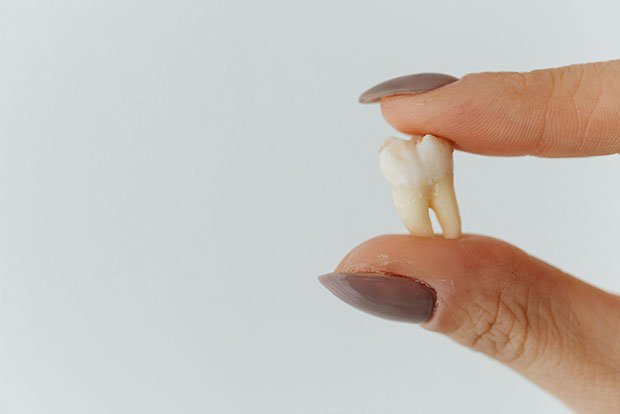
People usually don’t think about their wisdom teeth until something reminds them. Sometimes it’s a dull ache after a long day of chewing on the right side. Sometimes a swollen flap of gum makes brushing uncomfortable. And sometimes it’s nothing more than a strange pressure that comes and goes. At Gamma Dental Clinic, Dr Olga Gelfand and Dr Zoren Ratner hear dozens of versions of this story, each slightly different, but all pointing toward the same conclusion: the tooth doesn’t have space to do what it’s trying to do.
The thing about wisdom teeth is that they don’t follow a clear script. One might erupt fully and behave. Another, sitting just a few millimeters away, finds itself trapped under bone. Patients often arrive assuming it’s a small irritation that will pass. By the time swelling shows up twice, most people understand it’s not temporary. It’s the jaw quietly saying, “there’s no room here.”
What usually brings people in isn’t severe pain—more often it’s the unpredictability. A tooth that aches one week might stay quiet for a month. Then, suddenly, chewing gum or biting into something firm wakes it up again. Some patients mention a taste of metal or a slight bitterness, which turns out to be infection under the gum flap. A few feel tension near the ear and don’t even realize it’s coming from the back molar.
It’s almost always about space. The jaw stops growing long before the third molars appear. So when they try to push through, they collide with bone or lean into the second molar.
There is also the issue of cleaning. Even people with excellent hygiene struggle to reach the far back. A partially erupted wisdom tooth forms a little pocket where food lingers. That pocket becomes irritated easily. After a few rounds of swelling, most patients decide that removing the tooth is more sensible than treating the same inflammation repeatedly.
Damage to the second molar is another quiet problem. People rarely feel it directly, but X-rays show the pressure clearly. Dr Ratner sometimes points to a faint groove on the back of the second molar and explains how an angled wisdom tooth gradually rubs against it. It’s not dramatic, but it matters.
Cysts are less common, though they do happen. They form slowly around impacted teeth and can hollow out sections of bone. Most patients are surprised when they see this on the scan—they never felt anything that serious.
An impacted tooth can sit vertically, horizontally, or at a diagonal. The angle determines the symptoms. A forward-leaning tooth usually irritates the gum. A horizontal one tends to cause deeper aches. Occasionally, a tooth sits upright but refuses to erupt because bone blocks its path.
Patients often underestimate the signs. Someone might say, “it only hurts if I sleep on my right side,” or “I feel it when I yawn too wide.” Those little details matter; they tell the dentist how the tooth is positioned. A scan then confirms what the symptoms hinted at.
At the clinic, patients often take a moment to look at the radiograph. Seeing the tooth tucked sideways behind the molar makes the situation more understandable. Many people actually feel relieved—now the discomfort finally has an explanation.
The procedure itself is much calmer than most expect. The preparation, honestly, takes longer than the extraction.
The appointment begins with an exam and imaging. Dr Gelfand studies the roots, the way the nerve runs nearby, the outline of the bone, and the thickness of the gum. These details influence the technique but also help set realistic expectations for recovery.
Local anaesthesia is standard. Most patients relax quickly after the numbness sets in. A few prefer mild sedation, especially if they feel anxious. The team accommodates that when appropriate. Accessing the tooth depends entirely on its depth. If there’s already a visible part, the process is simpler. If the tooth is buried, a small opening in the gum exposes the crown. Bone removal is minimal—just enough to free the tooth. Sometimes the doctor sections the tooth into pieces so it can come out gently rather than with force.
Once the tooth is removed, the area is cleaned, the bone is smoothed if necessary, and dissolvable stitches close the site. The sutures help keep food out during the first days of healing. Some people notice a slight tugging sensation where the stitches sit, but it fades quickly.
Recovery is predictable in shape, but the timing varies. The first day is mostly about swelling—everyone swells differently. Applying ice reduces it, and resting makes a noticeable difference. The mouth may feel stiff, especially in the morning.
By day two, the swelling has usually peaked. This is when many people look in the mirror and think they’re more swollen than expected; it’s normal. Soft foods make eating easier, and lukewarm saltwater rinses help keep the area clean without disturbing the clot.
Most people feel improvement around day four. Discomfort fades, and the stitches start to soften. Some individuals forget about the extraction by the end of the week, while others need a little longer if the surgery was deeper.
Dry socket is the one thing everyone wants to avoid. It’s rare, but it does happen when the clot dissolves too early. When it occurs, the pain becomes sharper rather than dull. Dr Ratner simply cleans and medicates the site; relief usually arrives within minutes.
The immediate aftermath—slight stiffness, mild swelling, occasional bruising—is short-lived. The long-term result is usually a sense of ease: no more recurring inflammation, no trapped food behind the molar, no sudden flares after hard chewing.
Patients often mention that they didn’t realize how much tension they’d gotten used to until it was gone. Breathing through the mouth, yawning widely, or chewing tough foods all feel simpler without that pressure point in the back.
People tend to wait, hoping the irritation will settle on its own. It rarely does. The right time to schedule a consultation is when you notice:
• repeating bouts of gum swelling
• pressure or aching behind the molars
• a gum flap that traps food
• difficulty opening the mouth comfortably
• pain that radiates toward the ear or jaw
An evaluation doesn’t obligate you to proceed with removal. It simply gives clarity.
Do all wisdom teeth need to be removed?
No. If the tooth erupts cleanly and causes no trouble, it may stay. The decision is case-by-case.
Is the procedure painful?
You’ll feel pressure but not sharp pain. Afterward, discomfort feels similar to soreness after biting something too hard, only deeper.
How long does healing take?
Most people return to normal routines within a few days. Full healing of bone takes longer, though you won’t feel it.
What can I eat?
Smooth foods at first. Then whatever feels comfortable as days pass.
Can wisdom teeth affect other teeth?
Yes, especially if they push forward. They can irritate or damage the second molar.
What if I already have an infection?
The infection is treated first. Once the area settles, removal becomes safer and easier.
At Gamma Dental Clinic, wisdom tooth removal is approached with calm, precise technique. Dr Olga Gelfand and Dr Zoren Ratner take the time to understand each case, explain the findings clearly, and guide patients through recovery without rushing. Their goal is to prevent recurring issues and ensure the experience feels straightforward, even for those who arrive nervous.
If you’ve noticed swelling or recurring discomfort, an evaluation can help determine whether removal is the right step. Many patients find that understanding the situation alone brings relief.