
Most people do not plan to have a root canal. They arrive because something has changed. The tooth feels different. Chewing on one side no longer feels safe. Cold lingers longer than it used to. Or the pain stopped suddenly, which can be just as concerning.
When root canal treatment is recommended, it is usually because the tooth has crossed a threshold. At that point, the question is no longer whether the tooth will heal on its own, but whether it can still be saved.
At Gamma Dental Clinic, both Dr Olga Gelfand and Dr Zoren Ratner see this situation regularly. Many of these teeth looked acceptable for a long time. The surface appeared intact. The symptoms were manageable. Internally, however, the condition was progressing.
What Goes Wrong Inside the Tooth
A healthy tooth has a living centre. That tissue reacts to irritation and, within limits, can recover. Once bacteria reach that space, recovery is no longer possible.
This usually happens gradually. Decay deepens. A filling leaks. A crack develops that cannot be seen without magnification. Sometimes a tooth is injured years earlier and slowly loses its blood supply. Patients often do not connect these events.
By the time infection is established inside the pulp, the tooth becomes a closed system with no way to clear bacteria. Pressure builds. Tissue breaks down. Infection follows the root toward the bone.
At that stage, no amount of waiting restores normal function.
Why Pain Is Not a Reliable Guide
Pain is unpredictable. Some infected teeth hurt constantly. Others only react when chewing. Some barely hurt at all.
A common misconception is that pain intensity reflects urgency. In practice, that is often wrong. Teeth that no longer respond to temperature can still be actively infected. In fact, the absence of pain sometimes indicates nerve death, not improvement.
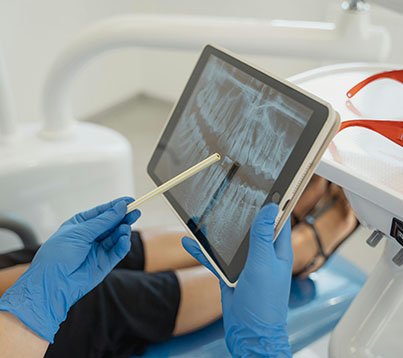
This is why dentists rely on imaging and testing rather than symptoms alone. A quiet tooth can still be a serious problem.
What a Root Canal Actually Changes
Root canal therapy removes the tissue that can no longer survive. The canals are cleaned and sealed. The outer structure of the tooth remains.
This is not done to “fix pain.” It is done to stop an infection from spreading further and to keep the tooth in place.
From a clinical standpoint, it is often the most conservative option once the pulp is compromised. Extraction removes the problem quickly, but it also removes structure that the mouth depends on.
The Cost of Doing Nothing
An untreated root canal infection does not pause. It advances at its own pace.
Over time, bacteria exit the root and affect the surrounding bone. Bone loss does not cause immediate pain, which is why it is often missed. Abscesses form. Drainage paths develop through the gums. Swelling appears unexpectedly.
At that point, treatment becomes reactive rather than planned. Options narrow. Teeth that could have been saved earlier are often lost.
This is one of the more frustrating outcomes, because it is largely preventable.
Root Canal vs Extraction Is Not a Simple Preference
Some patients ask to remove the tooth instead. That choice has consequences that are not always obvious at first.
After extraction, the jawbone begins to change. Teeth shift. Bite relationships alter. Replacement solutions such as implants work well, but they are not neutral substitutes. They require surgery, healing time, and long-term maintenance.
When a tooth can be preserved predictably, keeping it often leads to fewer problems over time.
Is a Root Canal Dangerous
Root canal therapy is a routine procedure. Complications are uncommon when diagnosis and technique are appropriate.
The greater risk is usually not the procedure itself, but delaying treatment until infection becomes extensive. That increases uncertainty and limits options.
Most concerns about danger are rooted in outdated information or experiences from decades ago.
What Patients Usually Experience
Most patients are surprised by how unremarkable the appointment feels.
Local anesthesia prevents pain during the procedure. Pressure and vibration are normal. Severe discomfort is not.
After treatment, the tooth may feel tender when biting for a short period. This reflects healing in the surrounding tissues. It usually settles within days.
Persistent pain after treatment is not typical and should be evaluated, but it is not the norm.
Antibiotics Do Not Solve the Problem
Antibiotics sometimes reduce swelling or pain temporarily. This can create a false sense of resolution.
They do not remove bacteria inside the root canals. Once medication stops, symptoms often return.
Antibiotics are supportive in certain situations, but they are not a substitute for endodontic treatment.
Why Crowns Are Often Recommended
A tooth that has undergone root canal therapy no longer has an internal blood supply. Over time, this affects strength.
For back teeth in particular, a crown helps distribute chewing forces and reduces the risk of fracture. Without it, even a well-treated tooth can fail structurally.
This step is part of preserving the result, not an optional add-on.
Timing Matters More Than People Realise
Early root canal treatment is usually simpler than late treatment. Canals are easier to clean. Bone involvement is limited. Restoration is more predictable.
Waiting rarely makes the process easier. It usually makes it more complicated.
Frequently Asked Questions
What happens if you don’t get a root canal?
The infection continues to progress and often leads to abscess formation, bone loss, and eventual tooth loss.
Is a root canal painful?
Most patients tolerate the procedure well. Pain is more commonly caused by the infection before treatment.
Can a root canal heal itself?
No. Once the pulp is infected, it cannot recover without treatment.
Will a root canal save my natural tooth?
In many cases, yes. Preserving the tooth is the primary goal.
Can a tooth infection spread to the rest of the body?
Yes. Advanced infections can extend beyond the jaw and surrounding tissues.
Do I need a crown after a root canal?
Often, yes. Crowns help protect the tooth and reduce the risk of fracture.
A recommendation for root canal treatment is usually based on objective findings rather than symptoms alone. When imaging shows internal infection, delaying care rarely improves the outcome.
At Gamma Dental Clinic, treatment decisions focus on long-term stability and risk reduction, not short-term symptom control.